Exploring Arikok National Park: Caves, Cliffs and Wildlife
A practical guide to Aruba's protected wilderness: what to see, how to get around, which animals live there and how to visit safely.
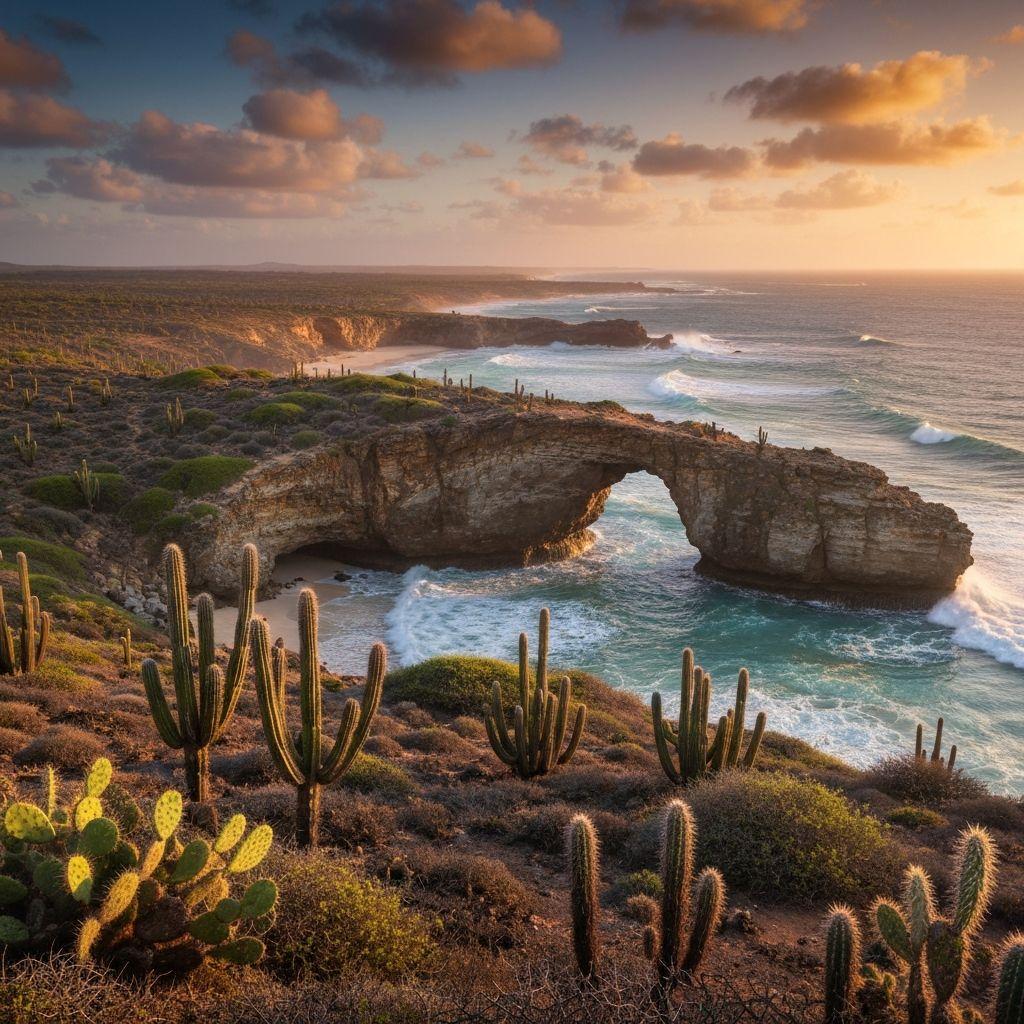
Away from the resorts, Aruba has a rugged and dry interior of cactus, hills and limestone cliffs. Much of that landscape is protected inside Arikok National Park, which covers roughly a fifth of the island on its eastern and northern side. It is the best place on Aruba to understand the island's geology, history and wildlife.
What Makes the Park Special
The park includes the island's highest hill, Jamanota, at about 188 meters (617 feet), as well as caves, dry riverbeds, rock formations and wild coastline. Its terrain is a good reminder that Aruba is a desert island: rainfall is low, the vegetation is adapted to drought, and the sea shapes much of the scenery.
Main Sights
Fontein Cave
Fontein Cave is known for its Indigenous drawings, which are a reminder of the people who lived on Aruba long before European settlement. Guided visits explain the history and the formations inside.
Quadirikiri Cave
Quadirikiri is a cave with openings in its roof, which allow daylight to enter and create a bright, dramatic space. It is also known for its bats, so move slowly and quietly.
Boca Prins and Dos Playa
These are wild, windswept beaches on the north coast with dunes and strong surf. They are beautiful to look at, but the currents are strong, so treat them as viewpoints and not as places to swim.
The Natural Pool (Conchi)
The Natural Pool is a rock-ringed pool on the coast, where waves are blocked by volcanic rock. Reaching it involves a rough track, so many visitors join a guided 4x4 or off-road tour. Conditions change with the sea, so follow local guidance on swimming.
Cunucu Houses
Traditional countryside houses, called cunucu houses, show how Arubans lived in the interior. Look for the colors, the small windows and the cactus fences around them.
Wildlife You Might See
- Shoco: the Aruban burrowing owl, often seen near the ground in dry terrain.
- Kododo blauw: the Aruban whiptail lizard, bright blue and common on rocks.
- Cascabel: the Aruban rattlesnake, a rare and protected species. Do not approach any wildlife.
- Goats and donkeys: descendants of animals brought to the island, seen across the countryside.
Planning Your Visit
- Go early: mornings are cooler, and the light is better for photography.
- Bring water: there is little shade and few services inside the park.
- Wear sturdy shoes: the paths are rocky and uneven.
- Choose the right vehicle: main sights are reachable by regular car, but rough tracks need a 4x4 or a guided tour.
- Check entry details: the park charges an entry fee and opening hours can change, so confirm before you travel.
- Leave no trace: stay on marked paths and take your trash with you.
If you want to see Aruba's natural side without leaving the coast, read our guide to the island's best beaches, or learn how the island took shape in our history section.